Thursday, August 30, 2012

James 5, here we go.

Let's work on the Epistle of James, chapter 5, with a few questions:
  1. A person who cheats his workers of their pay, in v. 4, is committing sin, a grievous sin which cries out to heaven. What is the nature of that cry? For what does it ask?
  2. Is keeping back a wage the sin of theft or lying?
  3. Have you ever been cheated out of a paycheck?
  4. Does slavery jive with James' admonition here in v. 4?
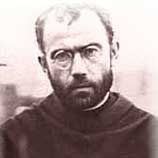
  5. What would Blessed Sal of Goldenrod say is the answer to v. 4's injustice?
  6. Did Jesus ever get cheated of wages?
  7. Is there ever a cry out of heaven along the same lines that James describes in v. 4?
  8. Were the prodigal son and his father ever in a wage dispute?
  9. Anointing with oil, as a sacrament, has its roots in vv. 13-15. What kinds of anointing happened in the Old Testament?
  10. Was Jesus ever anointed?

We must gaze steadily into the perfect Torah of freedom, if we desire wisdom. The Epistle of James is just a start.

Wednesday, August 22, 2012

James 4, a few questions

Let's think over these questions concerning chapter 4 of James' epistle:
  1. Is prayer a battle?
  2. Is prayer a gift from God?
  3. What good does it do to pray?
  4. Think of ten different ways of life: rich man, poor man, beggar man, thief etc. How would each answer question 3?
  5. What causes distraction?
  6. Have you ever thought that your prayer of petition is unheard? WHy did you think that?

Let's have a cup of coffee and then talk this over, with James as our teacher.

Wednesday, August 15, 2012

A few questions in James 3

This chapter concerns how we use our tongue to speak, and the nature of our words. Here are some questions we might begin with:
  1. A teacher, to James, is a person who primarily communicates by ______. (multiple choice)
    1. his spoken word
    2. his YouTube account
    3. his writing
    4. artwork and sculture
    5. Chuck Norris concepts
  2. The tongue of a man is compared to a horse's bit and to a teeny rudder. What part of a man fulfills the analogy of the reins by which the rider controls the bit?
  3. Continuing the analogy: What part of a man compares to the ship's wheel?
  4. Completing the analogy: who or what is the rider of the horse, the captain of the ship?
  5. Did Job ever have occasion to sin with words from his mouth? How about Moses?
  6. Read Psalm 19. How does the final verse jive with James' teaching in chapter 3?
  7. In v. 11, James mentions a spring of pure water. What should be the source of our pure words?
  8. Can a person dip into jealousy or selfish ambition without some unwise spoken words?
  9. How do jealousy and selfish ambition, spoken openly, help a teacher of the Lord's way to lead students toward God?

We will start with these questions on Thursday morning, a lot to learn.

Thursday, August 9, 2012

James 2

Questions for chapter 2 of James:
  1. Why are good works an essential part of Christian faith?
  2. James remarks in v. 19 that even the demons believe. What does that mean for a Christian who seeks to be obedient to God?
  3. If faith without works is dead, then is it similar to bodily death?

Saturday, July 28, 2012

Get going with James 1

Here are some study questions for starting to read in the epistle of James:
  1. In Proverbs, wise King Solomon says that the fear of Lord is the beginning of wisdom. How does the fear of the Lord arise in the soul?
  2. What part of the Our Father jives with the challenge of James, that we ask God for wisdom?
  3. Is a trial, mentioned in v. 2, the same as a temptation, mentioned in vv. 12-14?
  4. Was Jesus ever tempted?
  5. James admonishes us, saying that we must not "test" God the Father, in the sense of asking God to prove Himself. What is this testing? If you are in a trial of some kind, what would you want God to prove about Himself?
  6. The Church teaches that "the family should live in such a way that its members learn to care and take responsibility for the young, the old, the sick, the handicapped, and the poor." Would James have agreed with that?
There is a lot to learn in this beautiful writing. Let's have some coffee on Thursday morning, 7 AM, and then gaze into this perfect Torah of freedom.

Thursday, July 26, 2012

Completion of Philippians

Today we will finish our study of Paul's epistle to the Philippians, by diving into these questions:
  1. Recall the beatitude, "Blessed are the peacemakers, for they will be called sons of God." How do the concepts in v. 8 align with the actions of a peacemaker?
  2. Do you hear the echoes of the great commandment in v. 8?
  3. What happens when you offer alms to someone or to a group that is not actually in need? Is it an empty act?
  4. Is the city of Philippi the greatest city in the Roman world? Second greatest?
  5. What part of the Our Father corresponds to v. 19 about supply for our needs?
  6. Can an ordinary civilian follow in these same footsteps and attitudes of Paul?

It is excellent to think of these things, and through them to become a doer of the Word, God's perfect Torah of freedom.

Wednesday, July 18, 2012

Lots to think about in Philippians 4

There are a lot of things to think over when reading through Philippians ch. 4. Some questions are:
  1. Who writes down the names in the Book of Life?
  2. How does Paul know whose name is written in the Book of Life?
  3. If we are supposed to take up our cross, isn’t it then a contradiction to rejoice always?
  4. It seems like crazy talk to say, as Paul says, that we ought to have no anxiety.How is it possible?
  5. How can one make prayer and petition with thanksgiving in ALL things? Even when something bad happens?
  6. The peace of God sounds nice, but what is it, actually?
  7. Does the peace of God include our enemies?
  8. In v. 8, Paul writes about that which is true, that which is lovely, and so on. How many items are on your version of this list? I.e.,
    1. What is something true that you can think on?
    2. What is something lovely that you can think on?
    3. etc.
  9. How would Mary the Virgin have responded to v. 8?

Wednesday, July 11, 2012

Finish Philippians 3

We will take a few more questions to dig into Philippians chapter 3 this week, viz.
  1. In v. 13, St. Paul mentions that he leaves all the positive things he has done behind. What advantage is there to forgetting what lies behind?
  2. What is the one thing he does NOT forget about?
  3. How often have you trained for a physical task by imitating someone else who was proficient?
  4. St. Paul admonishes those who act as if they were enemies of the cross of Christ. OK, then one can ask, how does one act as a true comrade with the cross of Christ?
  5. Is it safe or not to be a true comrade of the cross of Christ?
There are a lot of questions we could ask, as we seek to become real doers of the Word, but this additional list of five can get us started.

On Thursday, we will also discuss where we will study after Philippians.

Wednesday, June 27, 2012

Two weeks off

Due to Vacation Bible School this week and Independence Day next week, we will take two weeks off from Men's Bible Study. Next meeting is on July 12.

Wednesday, June 20, 2012

Philippians 3

A few questions to consider for Thursday morning in Philippians chapter 3:
  1. Would you be more nervous standing next to a 3rd grader or next to the President of the United States?
  2. After you have helped serve meals to the homeless, does it make you more or less inclined to do so again?
  3. Where in the gospels does Jesus refer to a set of people as dogs?
  4. What things do you consider as positives, as "gains," but which are really negative when compared to the Lord?
  5. Did St. Thomas Aquinas ever get to this point, where he forgot about all his good work behind him and stretched forward to the prize?
  6. Is it impossible to live the life of a great saint?
Let's dig into chapter 3 with a few of these questions.